
Ninja HR
An Employee Management System built using the Laravel framework
About the Project
⚓︎Introduction
This project is an Employee Management System (Ninja HR) built using the Laravel framework. It is designed to streamline employee-related operations such as attendance tracking, payroll management, project and task management, and role-based access control. The system provides a robust platform for administrators and employees to manage their daily tasks, attendance, salaries, and projects efficiently.
The application includes features like check-in/check-out functionality, attendance tracking, salary and payroll management, project and task management, and role and permission management. It also supports QR code-based attendance tracking and PDF generation for attendance reports.
⚓︎Technical Implementation
Framework and Libraries
- Laravel: The project is built using Laravel, a PHP framework known for its elegant syntax and powerful features.
- Bootstrap: Used for front-end styling and responsive design.
- MPDF: Integrated for generating PDF reports (e.g., attendance reports).
- DataTables: Used for rendering server-side data tables for efficient data management.
Database
- MySQL: The primary database used for storing all application data.
- Eloquent ORM: Used for database interactions, providing an easy and efficient way to work with the database.
Authentication
- Laravel Auth: Built-in authentication system for user registration, login, and password reset.
Routing
- Laravel Routing: The application uses Laravel's routing system to define all the routes. Routes are grouped and protected with middleware to ensure secure access.
Controllers
- Resource Controllers: Used for CRUD operations on various models like Employee, Department, Role, Permission, etc.
- Custom Controllers: Implemented for specific functionalities like attendance tracking, payroll management, and project management.
Middleware
- Auth Middleware: Used to protect routes that require authenticated users.
- Custom Middleware: Implemented for specific role-based access control.
⚓︎Features
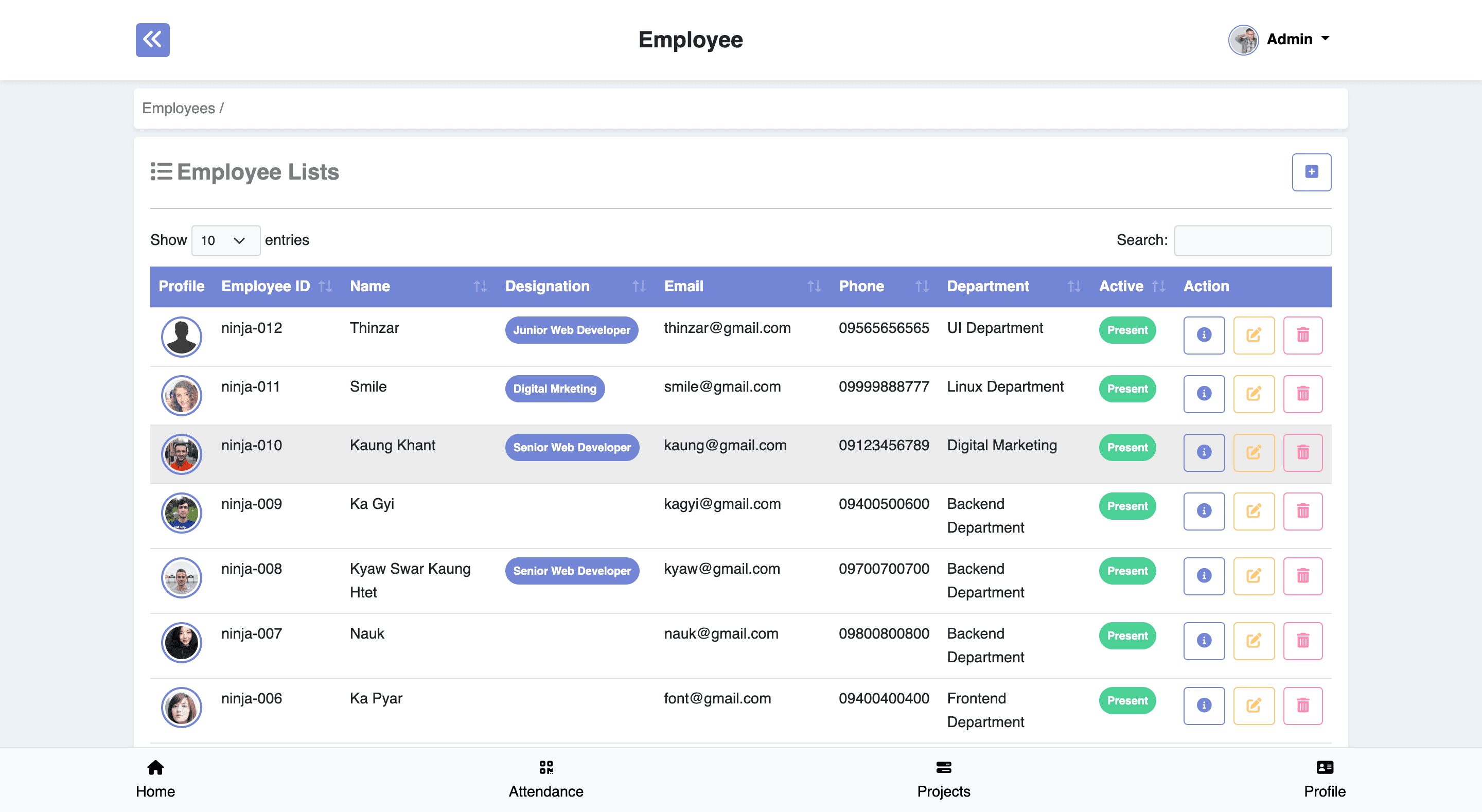
Employee Management
- Employee CRUD: Add, edit, and delete employee records.
- Employee Profile: Employees can view and update their profiles.
- DataTable Integration: Server-side data tables for efficient employee data management.
Department Management
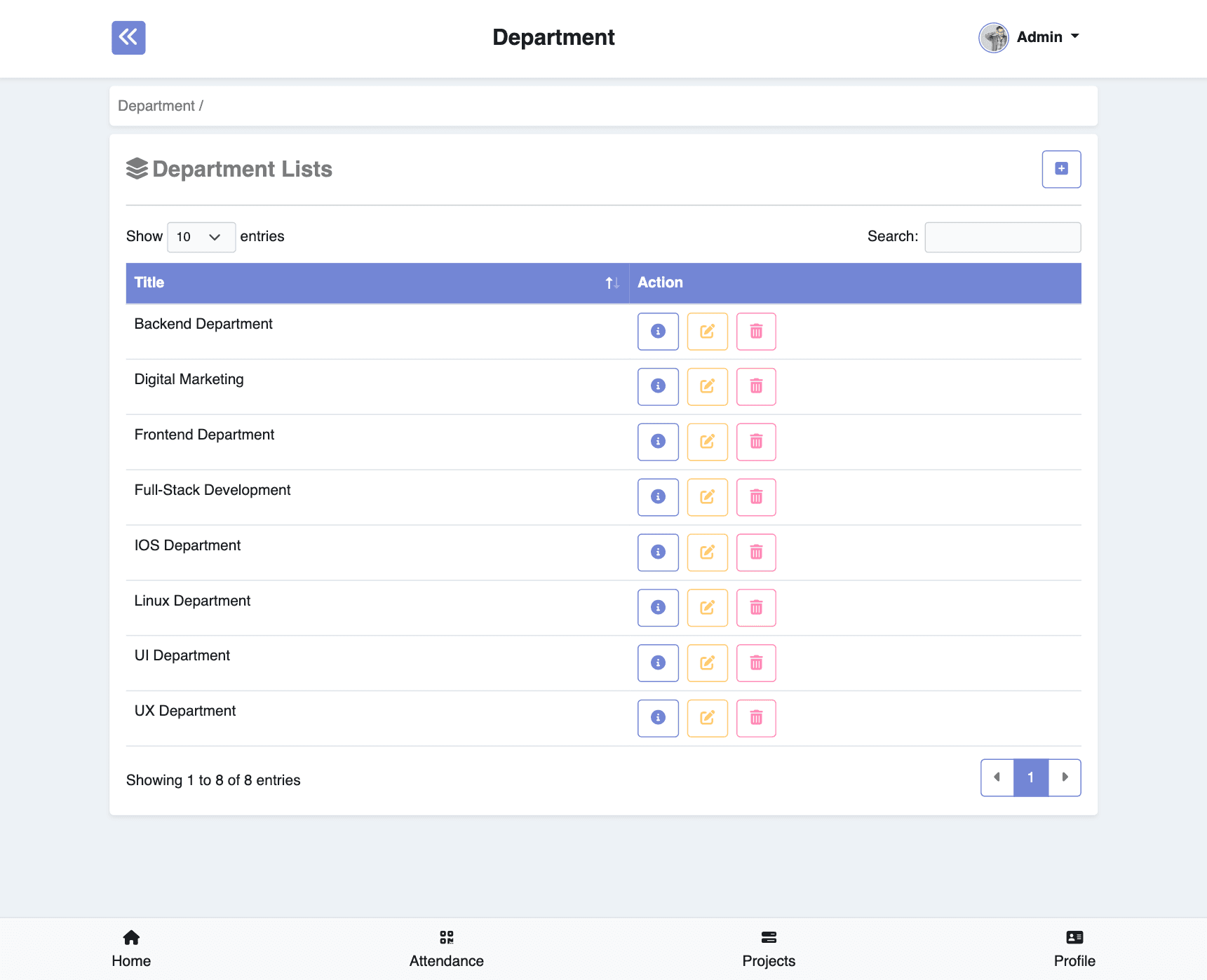
- Department CRUD: Add, edit, and delete departments.
- DataTable Integration: Server-side data tables for department management.
Role and Permission Management
- Role CRUD: Add, edit, and delete roles.
- Permission CRUD: Add, edit, and delete permissions.
- DataTable Integration: Server-side data tables for role and permission management.
Attendance Management
-
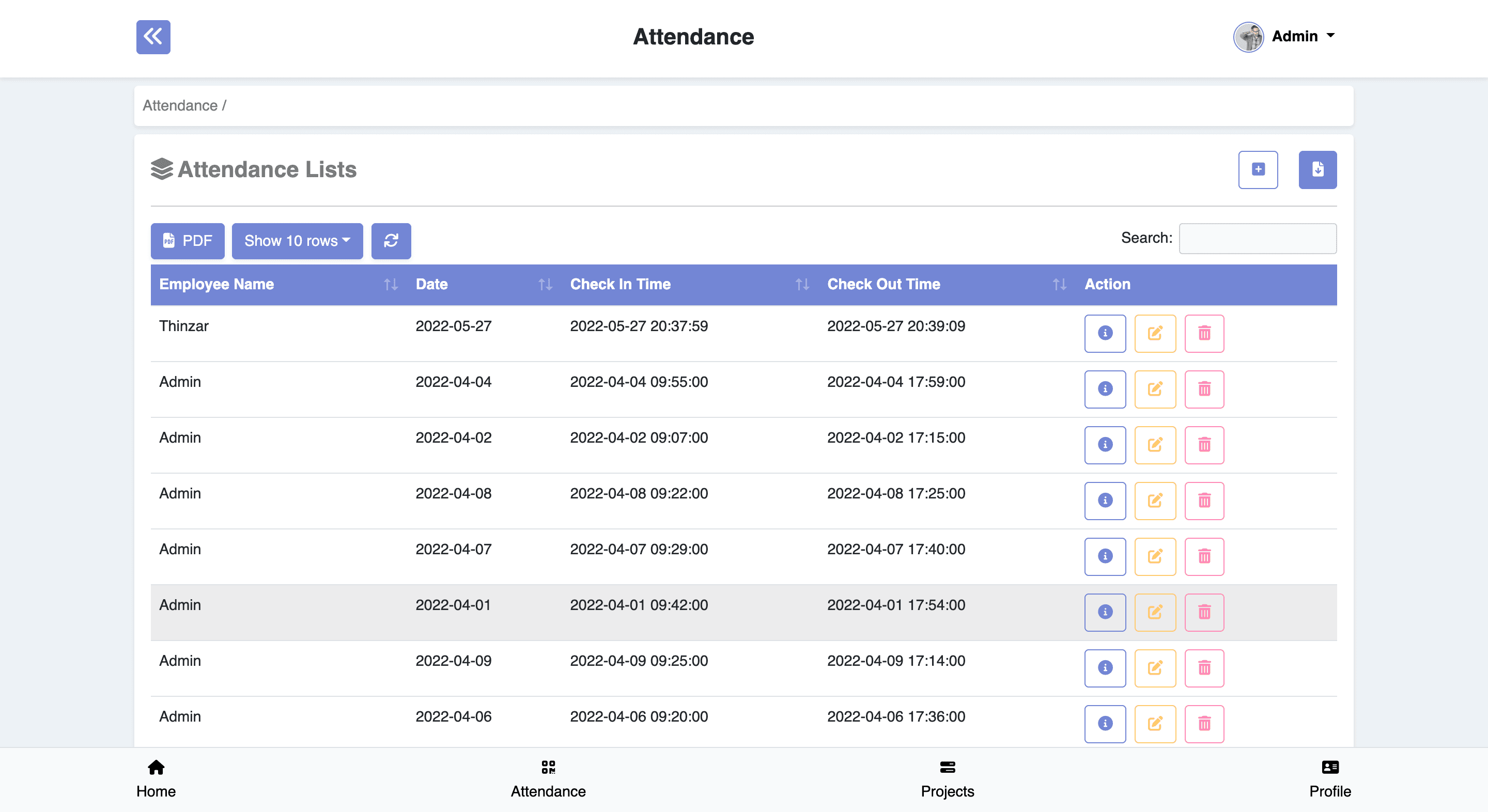
Check-In/Check-Out: Employees can check in and check out using a QR code-based system.
-
Attendance Overview: View attendance records for all employees or individual employees.
-
PDF Reports: Generate and download attendance reports in PDF format.
-
DataTable Integration: Server-side data tables for attendance records.
Salary and Payroll Management
- Salary Management: Add, edit, and delete salary records for employees.
- Payroll Overview: View payroll details for all employees or individual employees.
- DataTable Integration: Server-side data tables for salary and payroll management.
Project and Task Management
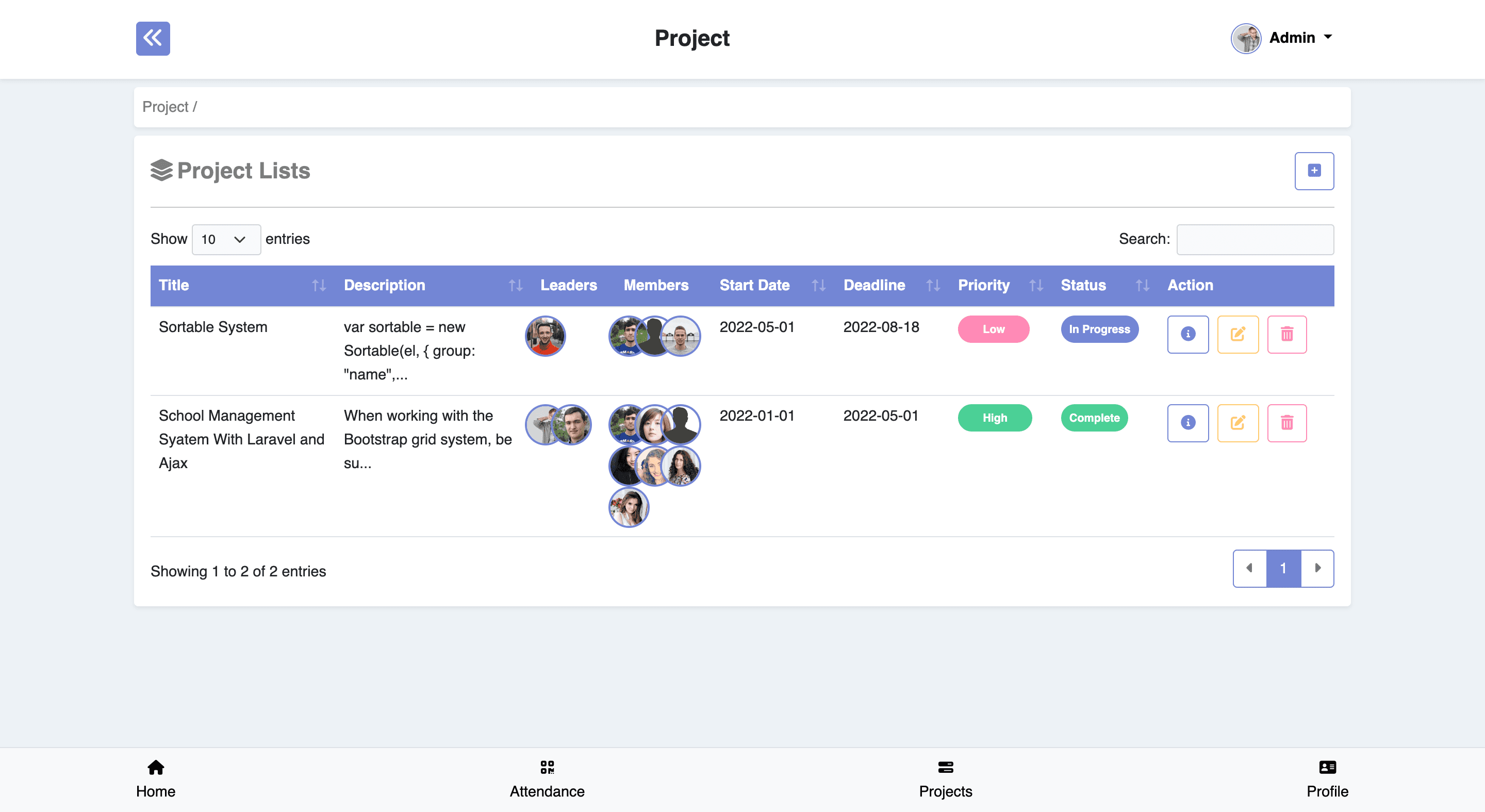
- Project CRUD: Add, edit, and delete projects.
- Task Management: Add, edit, and delete tasks for projects.
- Sortable Tasks: Tasks can be sorted and reordered dynamically.
- DataTable Integration: Server-side data tables for project and task management.
Company Settings
- Company Information: Update and manage company settings (e.g., company name, address, etc.).
⚓︎Conclusion
This Employee Management System is a comprehensive solution for managing employee-related operations in an organization. It leverages the power of Laravel to provide a clean, maintainable, and scalable codebase. The system is designed to be user-friendly for both administrators and employees, with features like QR code-based attendance tracking, PDF report generation, and role-based access control.